Digital Economy Agreements (DEAs)
Learn about how Singapore facilitates cross-border digital trade and promotes digital collaboration with international partners via our DEAs.
Last updated 19 February 2026
On this page
What are Digital Economy Agreements?

Our Digital Economy Agreements (DEAs) help Singapore navigate new trade realities brought about by digitalisation and unlock the benefits of the digital economy for our businesses and people. They seek to establish and shape international rules and benchmarks, promote digital trade and connectivity, and facilitate interoperability by aligning standards and frameworks.
Building on our extensive network of free trade agreements and digital cooperation initiatives, Singapore has concluded negotiations on five legally binding DEAs. We are also engaging other economies on future agreements and partnerships.
Have feedback on our DEAs? We want to hear from you!
The Ministry of Trade and Industry (MTI), Ministry of Digital Development and Information (MDDI) and Infocomm Media Development Authority (IMDA) are continually seeking ways to improve our DEAs and ensure they are beneficial for our businesses.
Your feedback matters – share with us the challenges or restrictions your company faces, and your ideas on how we can better facilitate digital trade. Take a few minutes to fill out the survey.
Why are DEAs important?

Our DEAs will:
Align digital rules and standards across jurisdictions, and facilitate interoperability between digital systems;
Support trusted and secure cross-border data flows and safeguard personal data and consumer rights; and
Encourage cooperation in emerging areas such as digital identities, Artificial Intelligence (AI), FinTech and data innovation. This gives organisations the scope to trial use-cases and technologies across different countries.
How can businesses benefit from our DEAs?
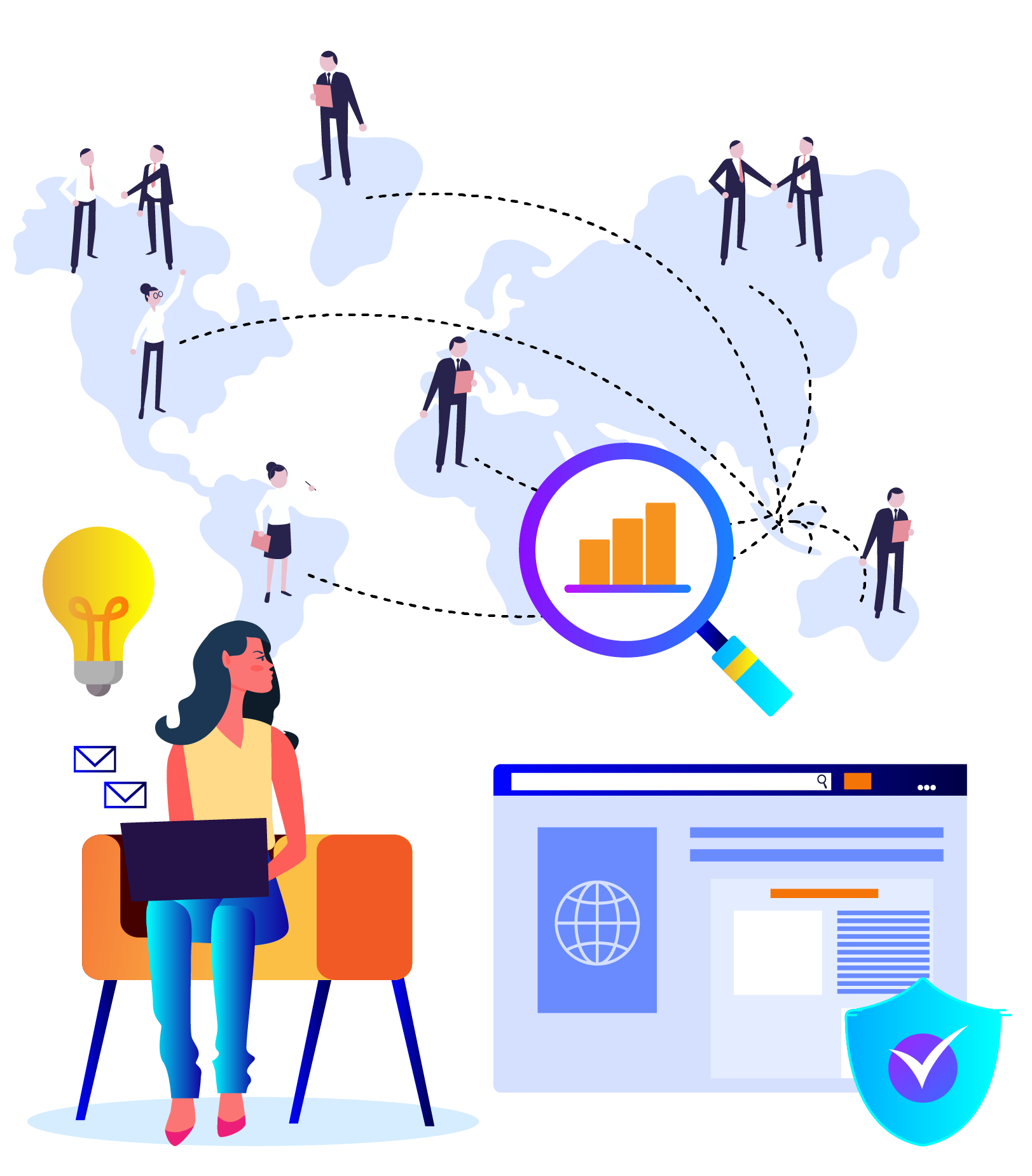
Our DEAs will enable companies in Singapore to connect with customers and partners abroad more seamlessly, by establishing common frameworks and rules for digital trade. Our DEAs also aim to help businesses lower operational costs and increase productivity, by enabling digital modes of operation and promoting innovation in emerging technologies.
As a start, businesses in Singapore can participate in the following digitalisation initiatives, which will benefit cross-border businesses and transactions.
Agreements / Collaborations
Digital Economy Partnership Agreement (DEPA)
The DEPA is a first of its kind agreement that promotes digital trade, trusted data flows, and inclusive digital economies among members.
European Union - Singapore Digital Trade Agreement (EUSDTA)
Enhancing digital connectivity and facilitating end-to-end digital trade between the EU and Singapore.
European Union-Singapore Digital Partnership (EUSDP)
Learn about the EU–Singapore Digital Partnership, which promotes trusted digital trade, innovation, and cooperation in areas like AI, data flows, cybersecurity, and digital standards.
Korea-Singapore Digital Partnership Agreement (KSDPA)
Explore the Korea–Singapore Digital Partnership Agreement, which enhances digital trade and cooperation between both nations through trusted data flows and emerging tech collaboration.
Singapore-Australia Digital Economy Agreement (SADEA)
The SADEA supports seamless digital trade, innovation, and cooperation between Singapore and Australia.
UK-Singapore Digital Economy Agreement (UKSDEA)
Establishing a clear framework for digital trade and connectivity between Singapore and the UK
WTO Joint Statement Initiative on Electronic Commerce (JSI on E-Commerce)
Learn about Singapore’s co-convenorship of the WTO JSI on E-Commerce, which develops the first-ever set of global digital trade rules for inclusive e-commerce participation.
Related page:
ASEAN Digital Integration
Discover how ASEAN’s digital integration enhances cross-border e-commerce, connectivity, and innovation to support growth and a seamless digital economy in the region.
Key provisions in our DEAs
Cross-border data flows
Cross-border data flows support e-commerce and other digitally-enabled activities, such as data analytics and AI. Under our DEAs, parties agree to allow data to flow freely across borders and prohibit the localisation of data except for legitimate purposes such as personal data protection. This facilitates a conducive environment where businesses can:
Serve customers regardless of where they are located;
Develop new products and services from data-driven innovation across borders; and
Choose where they store their data.
Found in: DEPA, SADEA, UKSDEA, KSDPA
Personal data protection
As businesses carry out electronic transactions across borders, personal data may be transferred as part of these transactions. Businesses would then have to navigate different jurisdictions’ policies and legislations on the handling and transfer of personal data across borders.
Through DEAs, Singapore will develop mechanisms with partners to promote compatibility and interoperability in legal approaches to cross border data flows, including safeguards for such data. An example is the mutual recognition of data protection and privacy certification frameworks and national trustmarks.
Find out more about:
Found in: DEPA, SADEA, UKSDEA, KSDPA, WTO JSI on E-Commerce
Paperless trade
The Paperless Trading provisions in our DEAs seek to enhance the digitisation of information related to goods and services trade, with the aim of increasing efficiency, lowering costs and increasing data accuracy and authenticity. This may involve:
Building seamless, trusted and secure connections between Parties’ Single Window systems;
Enabling the use of electronic trade documents for customs clearances (e.g. e-Certificate of Origin, e-SPS certification, etc.); and
Collaborating on promoting and developing data exchange systems, such as TradeTrust, which is a blockchain-powered framework developed by IMDA that enables governments and businesses to issue tamper-proof digital records, verify authenticity and provenance of documents, and effect title transfer across different digital platforms.
Found in: DEPA, SADEA, UKSDEA, KSDPA, WTO JSI on E-Commerce
E-invoicing
E-invoicing is the automated creation, exchange and processing of requests for payment between suppliers and buyers using a structured digital format. Our DEAs enable interoperability of e-invoicing systems between countries, allowing an e-invoice generated in Singapore to be accepted directly by another country’s e-invoice system. Businesses can enjoy shorter invoice processing time and potentially faster payment, leading to significant cost savings from not having to generate and track physical invoices.
Through the Nationwide E-Invoicing Network, companies can transact with their overseas partners seamlessly by adopting e-invoicing solutions that use the Peppol e-invoicing framework. In addition, SMEs can seek grant support to come on board through the SMEs Go Digital programme.
Find out more about:
Found in: DEPA, SADEA, UKSDEA, KSDPA, WTO JSI on E-Commerce
Fintech and e-payments
Cross-border electronic payments are a critical component of the online services ecosystem that allows businesses to enjoy faster payments, reduced transaction costs and enhanced trade. Our DEAs support this by enabling interoperability of payment systems and promote acceptance of e-payment solutions by non-bank players.
Found in: DEPA, SADEA, UKSDEA, KSDPA, WTO JSI on E-Commerce
Data innovation
With DEAs, companies can receive support to develop new products and services through data-driven innovation across borders. For instance, the establishment of data regulatory sandboxes can create safe environments for innovation, and resources such as the Trusted Data Sharing Framework can help organisations collaborate across borders and share data.
Interested companies can approach IMDA on how they can participate. Find out more about data sharing and innovation.
Found in: DEPA, SADEA, UKSDEA, KSDPA
Digital identities
Digital identities such as Singapore’s CorpPass provide data from government-verified sources to form a digital user profile. The use of digital identities can significantly streamline business processes, including company registrations, opening of corporate bank accounts, Know-Your-Client (KYC) checks and invoicing. Through our DEAs, Singapore will work with partners to facilitate initiatives that promote compatibility between different digital identity regimes.
Found in: DEPA, SADEA, UKSDEA, KSDPA
Open government data
Our DEAs explore ways to expand access to open government data to generate new opportunities for businesses. For example, businesses and governments can work together to identify sectors where open data sets can be used to facilitate business innovation.
Found in: DEPA, SADEA, UKSDEA, KSDPA, WTO JSI on E-Commerce
Artificial intelligence
Our DEAs promote the adoption of ethical AI governance frameworks, which set out principles to harness AI responsibly and build trust in AI systems across borders. Singapore organisations will find it easier to adopt and use AI technologies responsibly across jurisdictions, and to align their governance practices with common frameworks.
Found in: DEPA, SADEA, UKSDEA, KSDPA