Meet our Economists
Get to know our Economists.
Last updated 23 July 2026
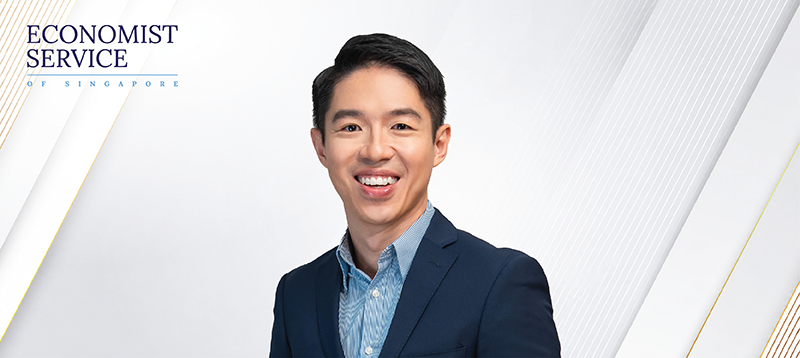
Lee Zen Wea

Deputy Director (Research) / Senior Lead Economist, Research & Strategy Management Division, Ministry of National Development
Zen Wea joined the Economist Service in 2013. As an Economist Service officer, he was posted to the Ministry of Trade and Industry (MTI) and the Ministry of Manpower (MOM) before joining the Ministry of National Development as a Deputy Director (Research). Zen Wea holds a Bachelor's degree from the National University of Singapore, and a Master's degree from California State University, Los Angeles.
What does a typical work day look like to you?
On a typical day, I could be evaluating public policies using different methodologies, contributing to research meetings with economists across the public sector, writing a think piece on a certain policy, or discussing economic literature and empirical research strategies with colleagues.
The variety of work keeps the job interesting and fulfilling. Fundamentally, economists need to be inquisitive, think on their feet and deliver sound analysis.
What has it been like working for the different ministries within the Public Sector?
Rotation across ministries gave me valuable opportunities to broaden my horizons. I worked on a wide variety of projects and gained exposure to policy issues from different perspectives. These experiences have helped me become a more well-rounded economist, with a more comprehensive understanding of economic issues.
What do you like best about working for the Economist Service (ES)?
I see the Economist Service as a nurturing environment, with a community of passionate people and many opportunities to develop, learn and grow. Economist Service officers bring different specialisations and interests, and I have learned much from them over the years. Development opportunities include training courses, rotations to government agencies and further studies. The work is also meaningful, as I have contributed economic insights to public policy deliberations.
Dr Gwee Yi Jie
Economist, Development Research Group, World Bank
Yi Jie joined the Economist Service in 2014. As an Economist Service officer, he has been posted to the Ministry of Trade and Industry (MTI) and the Ministry of Social and Family Development (MSF). Yi Jie holds Bachelor's and Master's degrees from the London School of Economics and Political Science. He also holds a PhD degree from Columbia University.
Why did you decide to be an Economist?
When I was first introduced to Economics in Junior College, I believed, with much bravado, that becoming an economist would enable me to explain almost anything and solve real-world issues, since Economics offers a powerful set of tools to study how the world works. While that naive view has since given way to a more nuanced understanding of the discipline, I have not regretted becoming an economist in the public service. Applying my economics training to study a wide range of economic and social issues, and to make a positive difference in the lives of Singaporeans, has been one of the most fulfilling aspects of my job.
What do you do in your day-to-day?
When I was working at MTI, I led a team that identified hot-button and emerging economic and social issues. We developed economic perspectives on these issues to better inform policy making, and communicated our findings through briefs, reports and research papers. This required us to read extensively and stay up to date with the latest academic literature. Where gaps in the literature existed, we embarked on new research projects.
What do you wish people knew about your job?
I wish people knew how seriously the Economist Service takes training. Economics as a field of study is advancing rapidly. Each year, the top five economic journals receive more than 5,000 papers and publish only around 300 papers. This means that we must continuously expand our technical capabilities and keep up with the latest developments in the profession. To support this, the Economist Service offers scholarships to officers to pursue Master's or PhD degrees, as well as opportunities to audit postgraduate classes at the local universities.
What is the most enjoyable part about your job?
The best and most enjoyable part about my job is applying what I learnt in school. As someone who geeks out about the latest applied econometrics techniques, joining the Economist Service has been a dream come true. The wide range of economic and social policies, and their different modes of implementation, allow for the use of creative empirical strategies to evaluate policy effectiveness. Moreover, Singapore has high-quality individual- and firm-level micro datasets that Economist Service officers can use for research. Applying robust empirical strategies to these datasets has been one of my most memorable experiences.
Sarah Liu
Senior Economist, Research & Statistics Unit,
Infocomm Media Development Authority (IMDA)
Sarah was awarded the Singapore Government Scholarship (Economist Service) in 2016. She completed her undergraduate degree at the London School of Economics and Political Science in 2019, and subsequently completed her Master's degree at the University of Cambridge in 2020.
She joined the Economist Service in 2020. After her postings at the Ministry of Trade and Industry (MTI) and the Organisation for Economic Co-operation and Development (OECD), she is currently working at IMDA as a Senior Economist.
Why did you decide to be an Economist?
I enjoyed studying economics in school and felt that working as a professional economist would allow me to do meaningful work by using economic methods to rigorously analyse issues and propose policies that improve societal well-being.
What do you do in your day-to-day?
As part of my macroeconomic surveillance and growth forecasting work for the US and Singapore economies, I monitor and analyse key economic developments affecting these economies. I am also involved in research studies that rigorously analyse policies across areas such as labour, firm digitalisation and firm innovation.
What do you enjoy about your job?
The work environment is intellectually stimulating and collaborative. I enjoy discussing research techniques, findings and policy implications with other economists and policymakers across a diverse range of policy issues.
What are some misconceptions people have about your job?
Some people may think that economists mainly collect data. In fact, we make sense of data through rigorous research and analysis. Our findings and recommendations also support key policy decisions across various domains, not just economic policies.